Cyclone Separator
Home / Cyclone Separator
Hydrocyclone Separator
Anyone who pumps liquid for any purpose (irrigation, industrial, or private and
public water systems) knows their greatest enemies are sand, silt, grit, or other
solids. These elements reduce the efficiency of equipment by plugging and
clogging sprinklers, drip emitters, valves, and spray nozzles. They cost time &
money in repairs, replacement parts, downtime, wasted energy, and a loss of
productivity. Decreased efficiency is a major problem as equipment gradually
clogs up or wears out, lowering productivity until replacement occurs.
Eliminators are used for the removal of unwanted, heavier solids in all processes.
Usage
- As a pre-filter, it improves efficiency and minimizes liquid loss.
- Protects heat exchangers from fouling.
- Removes solids that clog spray nozzles and small orifices.
- Removes solids from liquids, preventing accumulation in sumps & basins.
- Minimizes solid accumulation in process cooling systems
Benefits:
- No maintenance costs
- No consumables like filter media, screens, cartridges etc. required
- Low pressure drop
- No moving parts & Closed system
- Continuous filtration
Easy installation (In line/Side line) - Automatic purging possible
- Mild Steel or Stainless Steel (all grades) manufacturing available
Operating Principle
The Sand Eliminator removes 98% of 70μ or larger sand, grit & other solids heavier than the liquid, before entering the equipment
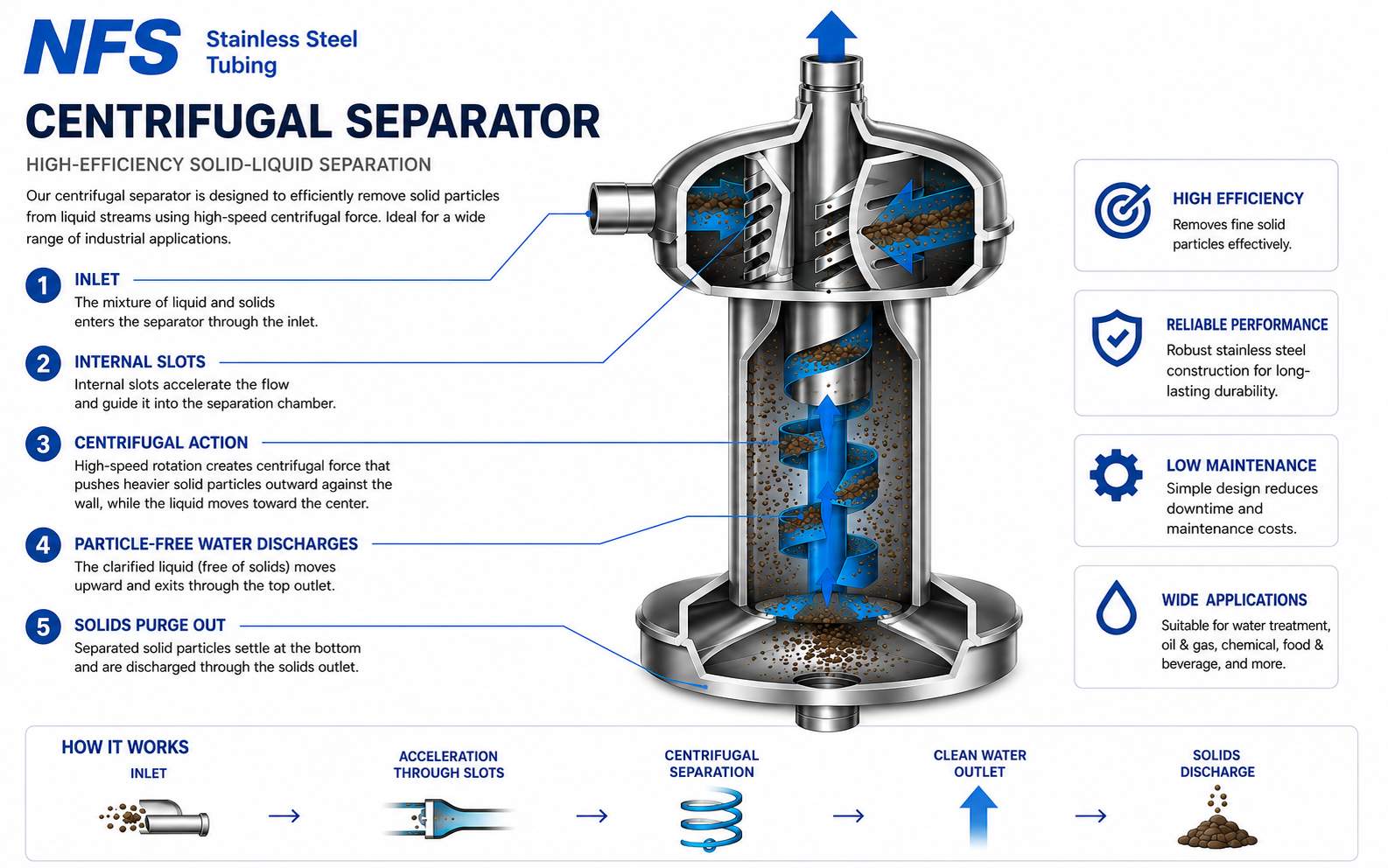
- Entry: Liquid with solids enters the unit tangentially, creating a centrifugal flow.
- Acceleration: The SHI top inlet construction accelerates this flow for optimal centrifugal action.
- Separation: Centrifugal force moves solids to the chamber sides, where they drop into a quiet collection chamber.
- Cleaned Liquid: The cleaned liquid rises through the vortex and exits through the top outlet.
- Solids Removal: Solids are periodically or continuously purged from the collection chamber.
Key Objective:
- Minimize particle fouling of cooling system components.
- Reduce maintenance and servicing requirements.
- Preserve the efficiency of the heat exchange process.
- Limit blowdown and chemical usage.
- Aid in controlling harmful biological growth in the basin/sump.
- Performance Criteria:
98% removal efficiency for particles sized 74 microns and larger, with specific gravity of 2.6 for solids and 1.0 for water and goes upto 31% efficiency for solids smaller than 40 microns and specific gravity of 1.8.
Capable of removing particles as fine as 5 microns, including those heavier and some lighter by specific gravity.
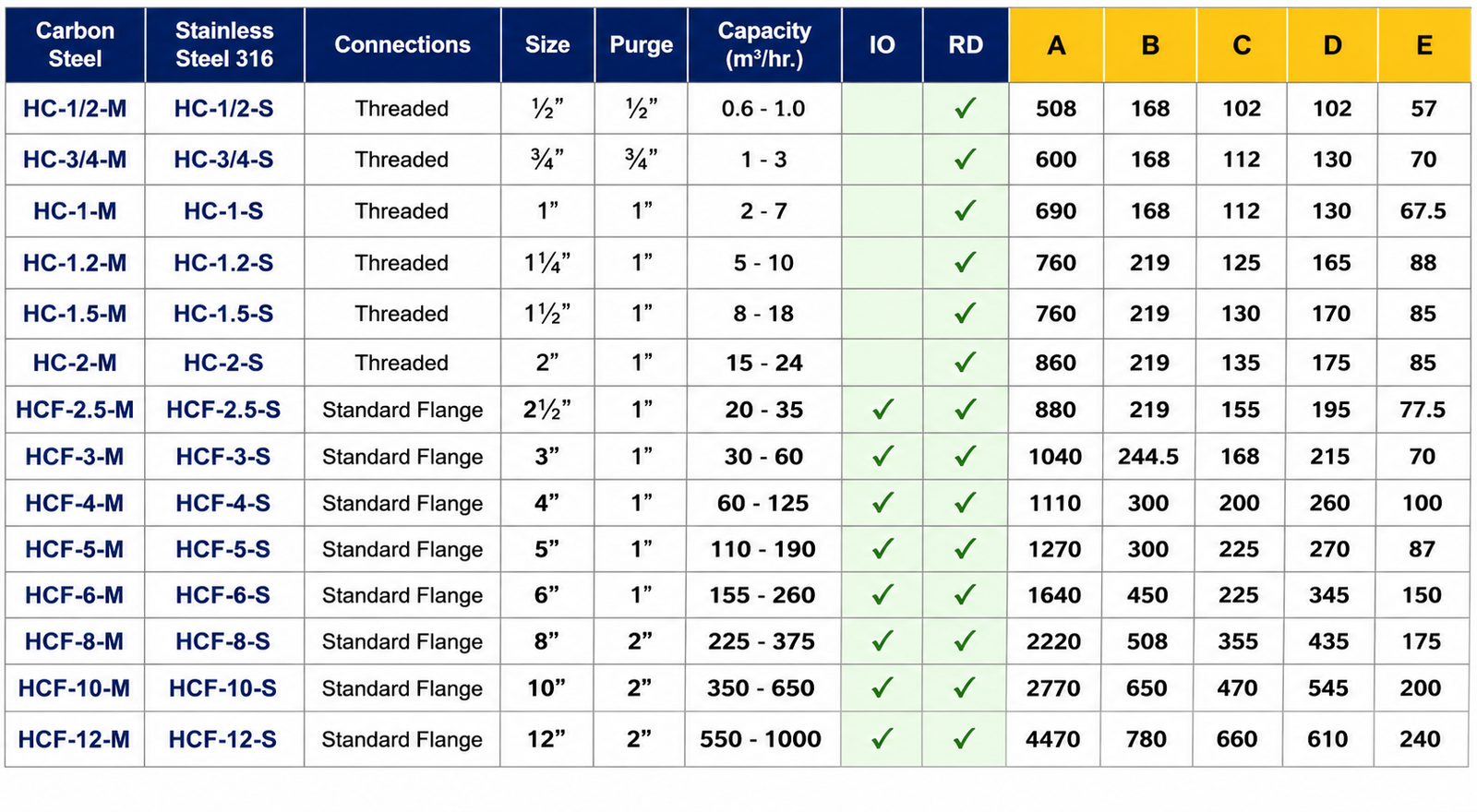
Models: